When the Clock Hits 2 A.M., That's When R&B Tells the Truth
When the Clock Hits 2 A.M., That's When R&B Tells the Truth
I've always believed that certain feelings have a curfew — not because they go away, but because they refuse to show up until everybody else has gone home. You can schedule a session for noon, bring in the best engineers, have the lighting just right and the vibe perfectly curated. But if you're trying to record something that actually hurts, something that reaches through the speaker and grabs someone by the chest? That rarely happens before midnight.
There's a reason so many of R&B's most iconic records carry that particular kind of weight. That heavy, stripped-down, I wasn't supposed to say this out loud energy. And a lot of it traces back to one very specific creative condition: everybody else was asleep.
The Studio After Hours Is a Different Place
Walk into a studio at 2 in the afternoon and it feels like an office. People are checking emails, somebody's on the phone, there are snacks on the table and small talk floating around. It's functional. Professional. Safe.
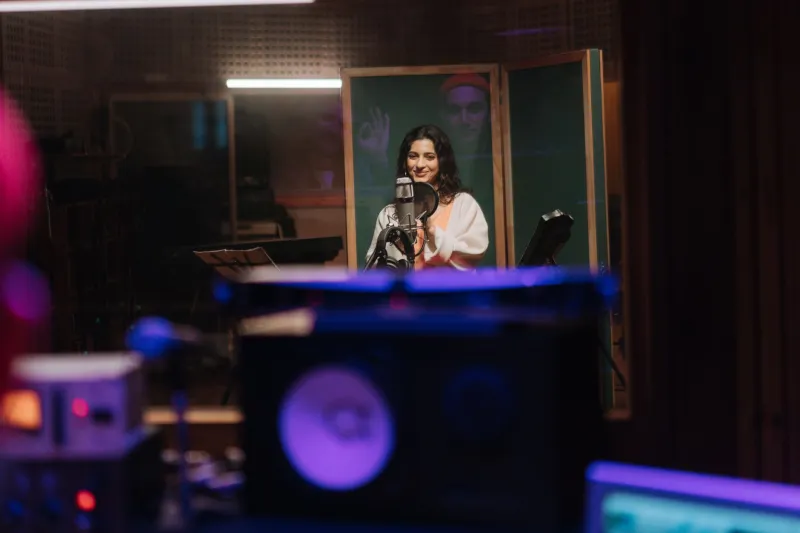
Walk into that same room at 2 in the morning and it's something else entirely. The overhead lights are usually dimmed or off. There's a single lamp somewhere. The city outside has gone quiet. And the artist sitting in front of that microphone has been awake long enough that their defenses have started to crack.
That's not an accident. That's the whole point.
Exhaustion is underrated as a creative tool in R&B. Not the kind that makes you sloppy — the kind that makes you honest. When you're tired enough, you stop performing at the song and you just start living inside it. The calculated choices fall away. The second-guessing quiets down. What's left is usually the realest thing you've got.
Vulnerability Needs Darkness to Breathe
Think about the songs that have genuinely stopped you mid-listen. The ones where you had to put your phone down and just sit with it for a second. Chances are, that record didn't get made during a well-organized afternoon session with a full team in the room.
There's a long, well-documented tradition in R&B of artists showing up to the studio late — sometimes unplanned, sometimes chasing a feeling that wouldn't let them sleep. D'Angelo reportedly worked through nights to chase the exact sonic texture he wanted on Voodoo. Mary J. Blige's most gut-wrenching ballads came from sessions where she was working through real pain in real time. Sade's entire catalog feels like it was recorded in a room where the sun hadn't risen yet.
That's not just lore. That's a pattern.
R&B, more than almost any other genre, is built on emotional specificity. It's not enough to sing about heartbreak in a general way — the listener has to feel the exact texture of your heartbreak. And that level of specificity is almost impossible to manufacture on a schedule. It shows up when it wants to. Usually late.
The Science of Stillness
There's actually something to the neuroscience here, even if artists don't think about it in those terms. Late at night, when external stimulation drops and the brain shifts into a quieter gear, people tend to access more emotionally raw, less filtered thought patterns. The analytical, self-monitoring part of the brain loosens its grip a little. What slips through is often more honest than anything you'd produce mid-afternoon with a to-do list running in the background.
For an R&B vocalist, that loosened grip is everything. It's the difference between singing a lyric and meaning it. Between hitting the note correctly and making someone cry in their car at 11:30 on a Tuesday night.
Stillness also changes the relationship between the artist and the room. When it's just you, one engineer, and a microphone at 3 A.M., the pressure to perform for an audience evaporates. You're not thinking about the label, the rollout, the single strategy. You're just in it.
Those Unplanned Moments That End Up Being the Whole Record
Some of the most beloved R&B songs weren't even supposed to happen the way they did. Artists have talked for years about moments where a session that started as something routine turned into something else entirely once the night got deep enough. A producer noodling on a chord. A vocalist who came in to work on one song and ended up pouring out something completely different. An adlib at the end of a take that nobody expected, that turned out to be the whole emotional core of the track.
Those moments almost never happen at 2 in the afternoon. They need the cover of night. They need the feeling that no one's watching, that the world has paused, that whatever comes out of your mouth right now doesn't have to be explained to anyone in the morning.
That's a specific kind of freedom. And R&B runs on it.
Why the Business Hours Version Is Never Quite the Same
Here's the thing about trying to manufacture that midnight energy during daylight: you can get close, but you can usually tell. There's a polish to daytime recordings that's hard to shake. A slight distance between the singer and the song, like they're describing something instead of living inside it.
The late-night version has a different texture. You can hear it in the breath. In the small imperfections that nobody fixed because it would've meant losing the feeling. In the way a vocal sometimes dips slightly off-pitch in a way that somehow makes it more true, not less.
The best R&B producers know this. They know when to call the session and when to just keep the lights low and let whatever's happening keep happening. They know that sometimes the most important thing they can do is stay out of the way and let the hour do its work.
Some Songs Just Won't Come Out Any Other Way
I think about this a lot as someone who loves this music deeply — who has had songs find me in the middle of the night and rearrange something inside me. Those records didn't happen by accident. They happened because somebody was willing to stay in the room long after the clock said it was reasonable, chasing a feeling that only comes out when the world gets quiet.
There's a specific kind of courage in that. In being willing to be that vulnerable, that unguarded, in front of a microphone at an hour when your armor is down. And the listener always knows. You can't fake that kind of truth.
So the next time a song hits you somewhere deep — really hits you, in that way that makes you feel less alone in whatever you're carrying — there's a decent chance it was born somewhere after 2 A.M., in a dim room, when the only thing left to do was tell the truth.