The Studio Is the Stage: Why Some Artists Were Never Meant to Leave the Booth
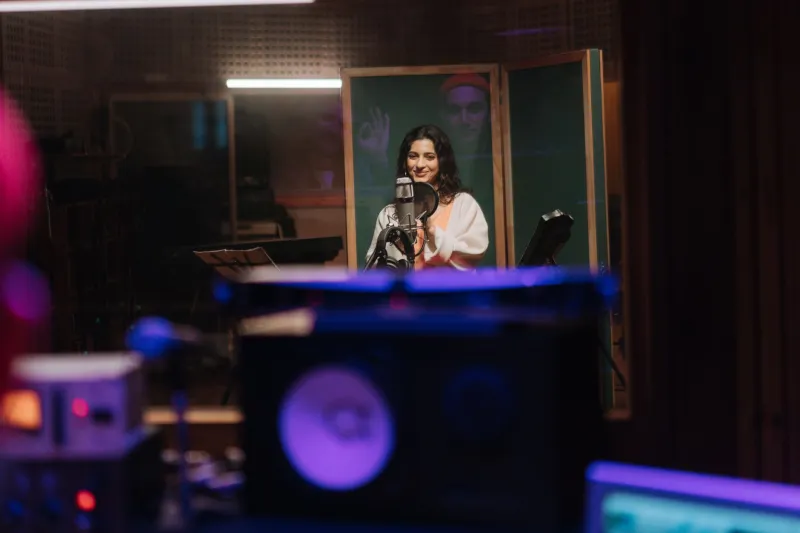
There's a moment that happens when you put on a certain album — lights low, phone face-down, the world on pause — where it genuinely feels like the artist is right there. Not performing for you. Talking to you. That feeling? That's not an accident. That's the studio doing what it was always meant to do: create a space so intimate that the music becomes almost too personal to share with a crowd of strangers.
And yet, every few months, we watch an artist we love step onto a stage and something just… doesn't translate. The voice is there. The songs are there. But the magic? It stayed back in the booth.
We need to talk about that.
The Myth That Every Artist Owes You a Tour
American music culture has this unspoken rule baked into it: if you make it, you perform it. Tours are treated like proof of legitimacy, like a live show is the final exam that determines whether your music actually counts. But that framework was built around a certain kind of artist — the performer, the showman, the person who feeds off a crowd's energy and gives it right back tenfold.
Not every artist is that person. And honestly? Some of the most gifted ones never were.
Think about the artists whose albums you've practically memorized — records that feel layered and alive no matter how many times you press play. A lot of that depth comes from the studio environment itself. The ability to record a vocal seventeen times and pick the take where your voice cracked just right. The freedom to whisper into a mic at 2 a.m. and have that vulnerability captured in perfect detail. You simply cannot replicate that from a stage in front of twenty thousand people.
What the Booth Actually Does
The recording studio is, in its own way, a performance space. It's just a performance space with an audience of one — or maybe a handful of trusted collaborators. And for certain artists, that's where they are most fully themselves.
The intimacy of studio recording allows for a kind of emotional precision that live performance rarely accommodates. A vocalist can lean into a lyric slowly, let a note dissolve naturally, or layer their own harmonies until the sound wraps around you like something physical. Producers can place a sound so specifically in a mix that it lives in your left ear and nowhere else. These are choices that belong to the studio. They don't survive the translation to a live PA system and a reverb-soaked arena.
Some artists understand this intuitively. They build their entire creative identity around the recorded format — the album as a complete, sealed world. When you put on their music, you're not watching a show. You're entering something.
R&B's Quiet Geniuses
R&B and soul music, more than almost any other genre, have always been home to this kind of artist. The genre's roots are deeply tied to emotion, vulnerability, and nuance — qualities that shine brightest in close quarters.
There are singers whose voices on record carry so much texture, so much ache, that you feel like you're eavesdropping on something private. But put them on a stage, and the energy shifts. It's not that they're bad performers necessarily — it's that the format doesn't serve what they do. The scale works against them. The distance between artist and listener, which the studio collapses entirely, becomes an actual obstacle.
And fans can feel that. There's a reason some of the most critically beloved R&B albums of the last two decades have come from artists who tour sparingly, if at all. The album is the experience. The tour would almost be a lesser version of it.
We've Been Trained to Conflate Performance with Worth
Part of why this conversation even needs to happen is because we've let the live show become a metric for artistic value. Streaming numbers, Grammy nominations, critical acclaim — all of that can be overshadowed in public perception by whether an artist can "bring it" on stage.
But that's a narrow way to think about what music is for.
Some art is made to be witnessed in real time. Some art is made to be discovered. Those are two completely different creative intentions, and they deserve to be respected as such. An artist who spends three years crafting an album that changes the way you hear silence isn't failing at anything by not following it up with a forty-city tour. They gave you the thing. They gave you the whole thing.
The pressure to perform publicly — to prove your music in a live context — can actually push studio artists into uncomfortable territory that dilutes what makes them special in the first place. And we, as listeners, don't always clock the damage until we're sitting in a show thinking, I wish I'd just stayed home and listened to the record.
The Studio as Its Own Sacred Stage
Here's a reframe worth sitting with: what if we started treating the studio the way we treat concert halls? What if we gave the same reverence to a perfectly constructed album that we give to a sold-out show?
Because the work that happens in a recording booth — the sleepless nights, the scrapped takes, the sound engineering decisions that most listeners will never consciously notice but will always feel — that's a performance. It's just one that happens before you ever press play.
Some of the most moving musical moments I've ever experienced didn't happen at a concert. They happened alone, with headphones on, somewhere between the second verse and the bridge of a song that felt like it was written specifically for whatever I was going through at the time. That kind of connection is only possible because someone stayed in the studio long enough to get it exactly right.
Let the Music Be Enough
At the end of the day, this is really about permission. Permission for artists to define what their art looks like without defaulting to the industry's checklist. And permission for listeners to love an artist fully — catalog, vision, and all — without needing a tour date to make it feel real.
Not every great voice was made for a microphone stand under stage lights. Some of them were made for a quiet booth at midnight, pouring something true into a track that will outlast any tour setlist ever written.
And that? That's more than enough.