Nobody Saw It Coming: The R&B Collabs That Rewrote the Rules
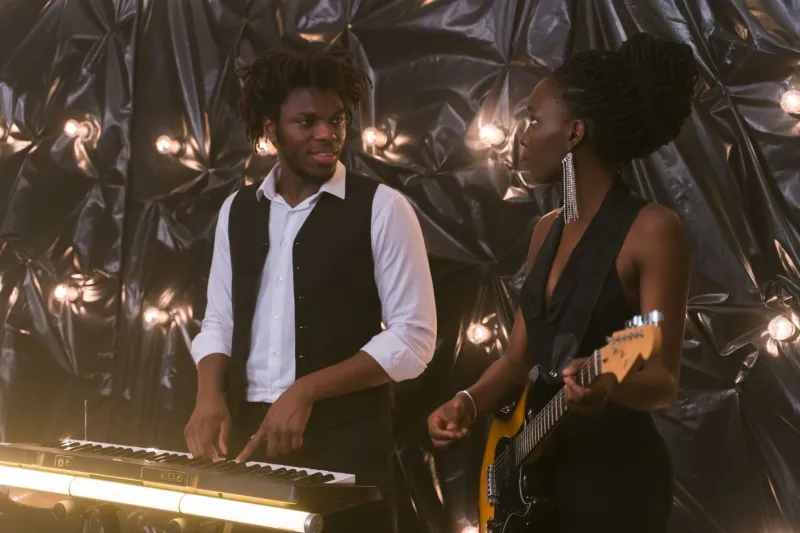
There's a particular kind of magic that happens when two artists collide in a way nobody predicted. No press release could have prepared you for it. No label rollout made it feel inevitable. It just dropped, and suddenly you were sitting there thinking — how did I not know I needed this?
R&B has always been a genre built on feeling, and sometimes the most honest feelings come from the most unexpected places. The collaborations that actually move culture aren't always the ones between the biggest names on the same label or the ones that got hyped for six months before release. Sometimes the greatest moments come from a random session, a late-night phone call, a shared producer, or just two artists brave enough to step outside what was comfortable.
Let's talk about some of those moments — and why they worked.
When Genre Lines Stopped Mattering
One of the most underrated things R&B has ever done is absorb other genres without losing itself. And nothing proves that more than the cross-genre collabs that felt like they had no business working — until they absolutely did.
Think about the era when R&B and hip-hop were still figuring out where one ended and the other began. The duets that emerged from that tension weren't just good songs — they were cultural negotiations. Two artists from different lanes meeting in the middle and creating something that belonged to neither lane exclusively. That kind of creative tension produces heat you can't manufacture.
Or consider the moment when R&B started reaching toward rock, toward country, toward electronic music. A lot of those experiments failed spectacularly. But the ones that worked? They expanded what R&B could even mean. They made room for artists who didn't fit neatly into any one box, and they gave listeners permission to feel more than one thing at once.
Chemistry You Can't Fake
Here's the thing about great duets — you can hear whether or not the artists actually like each other. Vocal chemistry isn't a production trick. It's real, and it shows up in the way two voices either fight for space or make room for each other. The best R&B collaborations sound like a conversation, not a competition.
Some of the most surprising pairings in R&B history worked precisely because the two artists brought completely different emotional vocabularies to the table. One might lead with vulnerability while the other brings an almost detached cool. One might be rooted in gospel phrasing while the other is pulling from jazz. When those two worlds meet on the same track and actually listen to each other, the result can feel almost spiritual.
The artists who pull this off aren't always the ones with the most technical skill. They're the ones with the most presence — the ones who can hold their own energy while still being genuinely affected by what the other person is doing in the booth. That's rare. And when you hear it, you know it.
The Behind-the-Scenes Risk Nobody Talks About
What doesn't get discussed enough is how much of a creative gamble unexpected collaborations actually are. When two artists from different worlds agree to share a record, they're also sharing their audiences, their reputations, and their artistic identity. If it doesn't land, both of them absorb the disappointment. That's a real risk, and it takes a certain kind of confidence — or maybe just a certain kind of trust — to take it.
Some of the most legendary unexpected duets in R&B almost didn't happen. Schedules didn't line up. Labels got nervous. Managers pushed back. The version of the song that exists in the world is sometimes the result of someone fighting hard to keep it alive when the easier move would have been to let it die in a folder somewhere.
That context matters. When you hear those songs now, you're not just hearing two voices — you're hearing the result of someone refusing to let the moment pass.
When the Audience Wasn't Ready — But Came Around Anyway
Not every unexpected collab got its flowers right away. Some of them landed with a thud on release and only found their audience years later, when the culture finally caught up to what those artists were trying to do. That's a specific kind of vindication — the slow burn recognition that comes when a song suddenly makes sense in a context it wasn't originally released into.
There's something really beautiful about that. It means the collaboration was ahead of its time, which is another way of saying it was honest. The artists weren't making the song for the moment — they were making it for the feeling, and feelings don't have expiration dates.
The R&B duets that aged best are often the ones that seemed strangest on arrival. The ones where listeners weren't sure what to do with them. Because that discomfort was actually just unfamiliarity, and unfamiliarity fades. What's left is the song itself, and if the song is real, it holds up.
What Makes a Collab Actually Work
After thinking through all of this, a few things become clear about what separates the unexpected duets that become classics from the ones that become cautionary tales.
First, both artists have to bring something the other one doesn't have. Not just a different sound — a different way of seeing. The best collaborations feel like two perspectives merging into one coherent point of view, and that only happens when both people are genuinely contributing something essential.
Second, there has to be mutual respect. You can hear disrespect in music. You can hear when one artist is phoning it in or treating the feature like a check instead of a creative opportunity. The collabs that last are the ones where both artists showed up fully.
And third — maybe most importantly — the song has to be the priority. Not the brand moment, not the streaming strategy, not the social media rollout. The song. When two artists agree to put the music first, even at the expense of what might be commercially safe, they give themselves a real shot at making something that matters.
R&B has always been at its best when it's been a little unpredictable. The genre's greatest moments didn't come from playing it safe — they came from someone being willing to step into a room with a person they'd never worked with and see what happened.
Sometimes what happened was nothing. But sometimes? It changed everything.