That Little Sound in the Background? It's Actually the Whole Song.
That Little Sound in the Background? It's Actually the Whole Song.
Close your eyes and think about your favorite R&B song. Now think about the part that makes you lose it every time. I'd be willing to bet it's not the perfectly polished lead vocal on the first verse. It's probably something smaller — a grunt, a laugh, a breathy little run tucked into the corner of the track that sounds like it barely made it onto the record. That moment that feels like the artist forgot the mic was on.
That's an ad-lib. And it's doing way more work than it looks like.
What We Mean When We Say Ad-Lib
The word gets thrown around a lot, but it's worth being specific. In a music context, an ad-lib is any vocal moment that sits outside the main melody or scripted lyric — the embellishments, the background responses, the spontaneous exclamations, the little vocal textures layered underneath or around the primary performance. They might be planned or they might be genuinely improvised in the moment. Either way, they're designed to feel undesigned.
In R&B and soul especially, ad-libs have always served a function beyond decoration. They communicate something the written lyric can't quite capture — urgency, joy, vulnerability, humor. They're the emotional punctuation of a song. The "I can't even explain this feeling so I'm just going to make this sound" of it all.
The Artists Who Made It an Art Form
Mary J. Blige is probably the queen of this, and it's not even a close competition. The way she deploys a well-placed "come on" or a rough-edged run that sounds like it's being dragged out of somewhere painful — that's not an accident. That's craft disguised as feeling. Her ad-libs on tracks like "Real Love" or "Not Gon' Cry" don't just accent the melody, they are the emotional core. You could strip out the lead vocal and just listen to her background work and still feel the whole story of those songs.
Missy Elliott brought something entirely different to the table. Her ad-libs are playful, weird, sometimes completely absurdist — and they became signatures. The sounds she layered into her own productions created a kind of call-and-response with herself, building this whole sonic personality that was impossible to separate from her artistry. When you hear a Missy ad-lib, you don't just hear a vocal flourish. You hear a worldview.
And then there's the quieter version of this — artists like Erykah Badu or D'Angelo, whose ad-libs aren't loud or demonstrative but feel like they're breathing alongside you. The barely-there hum. The exhale that lands right on the two. Those moments create intimacy in a way that a perfectly executed lead line sometimes can't.
What Actually Happens in the Studio
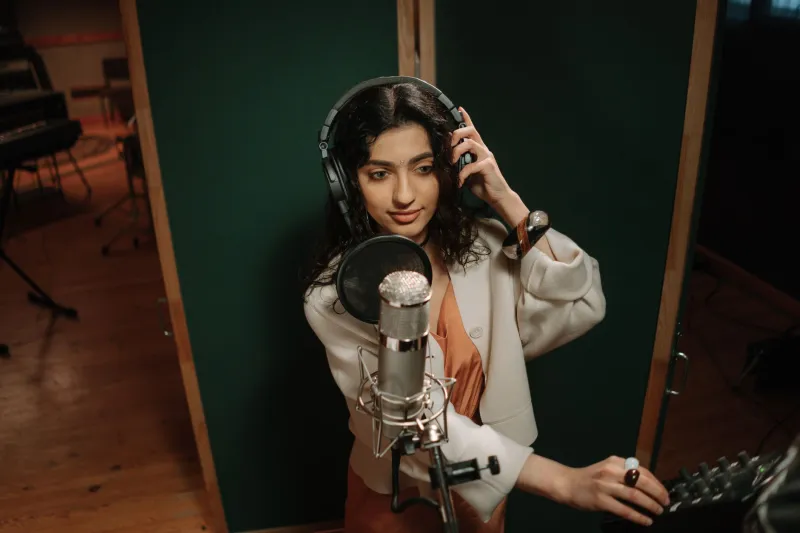
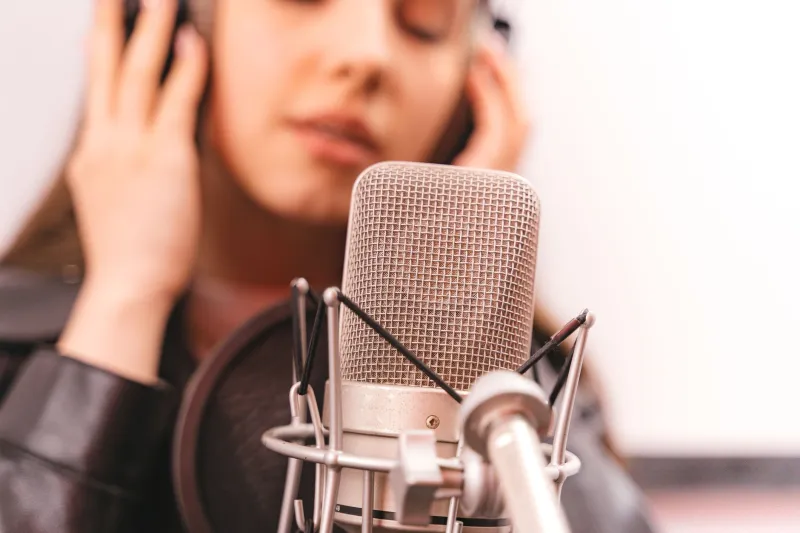
Here's the thing people don't always realize: a lot of ad-libs that sound completely spontaneous were actually captured in a very specific way. Producers and engineers have talked about this for years — sometimes the best vocal moments happen after the official take, when the artist thinks the session is basically over. They're relaxed. They're not performing anymore. And that's when something real slips out.
Some producers will deliberately keep the session running after a take wraps just to catch whatever happens next. Others will ask an artist to respond to the track without thinking — just react. What comes out of that kind of environment tends to be rawer and more emotionally direct than anything scripted.
There's also the layer-by-layer approach, where an artist will come back to a track multiple times and just respond to what they already recorded — having a conversation with their past self in the booth. That's how some of those incredibly dense, lush background vocal moments get built. It's not one session of inspiration. It's a relationship between an artist and a song that develops over time.
Why the Unscripted Parts Hit Hardest
Psychologically, there's a reason these moments land so deeply. We're wired to respond to authenticity, and our brains are actually pretty good at detecting when something is performed versus felt. An ad-lib — especially one that sounds genuinely spontaneous — reads as felt. It bypasses the part of our brain that's analyzing and goes straight to the part that just... responds.
It's the same reason a live performance sometimes hits harder than the studio version. The imperfections, the variations, the moments that couldn't have been planned — they signal realness. And in a genre built on emotional truth, realness is everything.
There's also something about the element of surprise. When a song does exactly what you expect it to do, it's satisfying. When it suddenly goes somewhere you didn't anticipate — when that ad-lib drops in and catches you completely off guard — it creates a little emotional spike. That spike is memorable. That's the moment you tell your friend about. That's the moment you rewind for.
We Memorize the Parts That Weren't Written
Maybe the wildest proof of how powerful ad-libs have become is the fact that fans memorize them with the same devotion as actual lyrics. Go to any R&B concert and watch what happens when an artist hits that signature ad-lib moment — the crowd goes just as hard for the background "ugh" as they do for the hook. Sometimes harder.
That's not a small thing. That means the throwaway moment became the communal moment. The thing the artist barely planned became the thing the audience carries with them.
And honestly? That's kind of the whole point of music, isn't it — to create those shared experiences that feel bigger than the song itself. Ad-libs just get there by a different route. Less polished, more human, entirely unforgettable.
Next time you're listening to a track you love, pay attention to what's happening in the background. The little sounds that feel like they almost didn't make it onto the record. Chances are, that's the most important part of the whole thing.