Stacking Voices: What Harmony Really Costs — and Why It's Worth It

Stacking Voices: What Harmony Really Costs — and Why It's Worth It
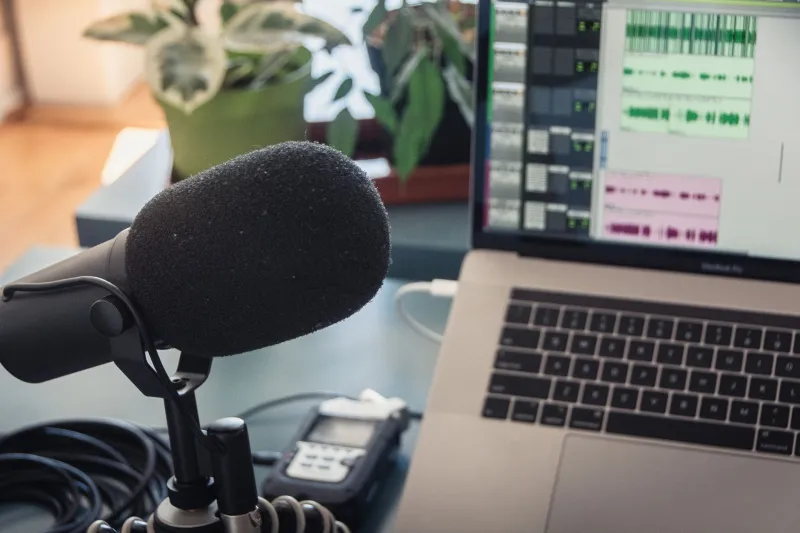
There's a moment in a recording session — and if you've ever been in one, you know exactly what I'm talking about — where the headphones go on, the track starts playing back, and you hear your own voice multiplied. Layered. Stacked on top of itself in ways that turn one person into something that sounds like a choir, or a whisper, or both at the same time. It's intimate in a way that's hard to describe. And it's terrifying.
Vocal layering is one of R&B's most defining production techniques, and most people who love the music have never stopped to think about what it actually takes to make it work. Not just technically — emotionally.
What Layering Actually Is (And Isn't)
For the uninitiated: vocal layering is the process of recording multiple vocal tracks — sometimes the same melody sung slightly differently, sometimes harmonies, sometimes ad-libs and runs — and blending them together into a single, rich sonic texture. Think of it as painting with your voice. One coat gives you color. Multiple coats give you depth, dimension, something that catches the light differently depending on where you're standing.
Brandy is probably the most studied example of this technique in R&B. Her use of stacked harmonies — particularly across albums like Never Say Never and Full Moon — is practically a masterclass. She doesn't just sing a melody and double it. She constructs entire sonic architectures, layering so many versions of her own voice that the result feels almost orchestral. It's stunning. And it requires an almost ruthless honesty about your own instrument.
Because here's the thing: when you layer vocals, you can't hide. Every flat note, every breath, every tiny inconsistency gets multiplied right along with everything else. The technique demands that you show up fully, imperfections and all, and trust that the whole will be greater than the sum of its parts.
The Vulnerability No One Talks About
In my own work, vocal layering has always felt deeply personal — maybe more personal than any single vocal take. When you're building harmonies with yourself, you're in constant conversation with your own voice. You hear yourself back in real time, and you have to decide: is this honest enough? Is this the real thing?
That question doesn't have an easy answer. It's the same question that comes up in any relationship worth having. Are you showing up as the real version of yourself, or are you performing a version that feels safer? Layering your voice doesn't let you perform. It strips that option away.
I think that's why the best vocal layering in R&B always feels so emotionally resonant — even when listeners can't pinpoint exactly why. They're hearing truth stacked on truth. They're hearing someone who trusted the process enough to be fully present for it.
Collaboration as the Real Foundation
Now here's where it gets interesting: even when an artist is layering their own voice — no other singers in the room — there's still a form of collaboration happening. Between the artist and the producer. Between the artist and the engineer. Between the artist and whatever emotional state they walked into that session carrying.
And when you bring other voices into it? When you're building harmonies with another singer, asking them to find the space between your notes and live there? That's an entirely different level of trust. You're essentially saying: I need you to hear what I'm doing, understand what I'm feeling, and add to it without taking it over.
That's not a simple ask. That's the same ask we make in friendships, in creative partnerships, in love. Be close enough to matter, but self-aware enough not to crowd me. It's a balance most people spend their whole lives trying to figure out.
Artists like Lalah Hathaway, who seems to exist in a completely different dimension when it comes to harmony, have talked about how instinctive good vocal collaboration has to feel. You can't force it. You can't intellectualize your way into it. You have to listen — really listen — and respond honestly. That's vulnerability in its most functional form.
What the Music Is Actually Teaching Us
I've been thinking a lot lately about how the things we love in music are almost always the things we're still learning in life. The way a perfectly placed harmony can make a melody feel complete? That's what it feels like when the right person shows up at the right time and fills in something you didn't even know was missing. The way a clashing note in a chord can create beautiful tension before resolving? That's every hard conversation that eventually leads somewhere good.
Vocal layering, at its core, is an act of faith. Faith that your voice is worth hearing in multiples. Faith that the people in the room with you — or the version of yourself you're building alongside — can hold the weight of what you're creating together. Faith that the mess and the beauty can coexist in the same track.
Let It Be Complicated
The next time you're listening to an R&B record and you feel that swell — that moment where the harmonies stack up and something in your chest shifts — pay attention to it. That's not just production. That's someone deciding to be brave enough to be heard fully, layered and unguarded, trusting that you'd meet them there.
Maybe that's worth trying outside the studio too.