Long Overdue: The Women of R&B Who Never Stopped Singing and Are Finally Being Heard
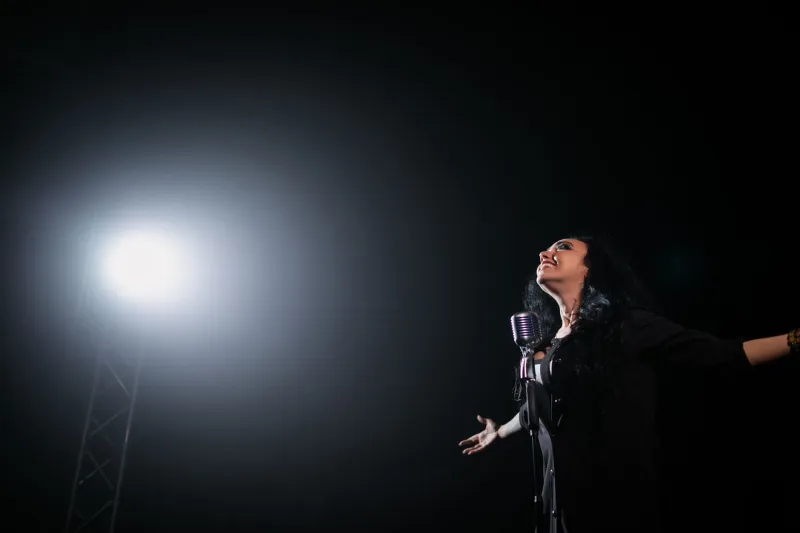
There's something quietly beautiful about watching someone finally get their moment — especially when you knew they deserved it all along. If you've been in R&B spaces for any stretch of time, you know exactly what I'm talking about. You've watched certain women pour everything into their craft, release music that should have stopped the world, and then... nothing. A little radio play. A modest fan base. A critical nod here and there. And then the industry moved on without them.
But here's the thing about real talent — it doesn't just disappear. It waits.
And right now, something is shifting. The women who were overlooked, undervalued, or just plain ignored during their prime are finding new audiences, new streams, and new respect. It's not luck. It's culture catching up to what some of us already knew.
The Industry Had a Type — and It Wasn't Always Honest
Let's be real for a second. The music business has never been fully fair to women, and it has been especially complicated for Black women in R&B. For every artist who broke through, there were dozens who had the voice, the songs, and the vision — but not the right look, the right label backing, or the right timing.
Artists who blended vulnerability with vocal power were sometimes deemed "too niche." Women who wrote their own material and refused to be packaged into something more palatable were labeled "difficult." The ones who sang from a deeply personal place — about real love, real loss, real womanhood — were celebrated in small circles but rarely given the mainstream push they earned.
And so they kept releasing music, kept touring smaller venues, kept building loyal but under-the-radar fan bases. They kept singing, even when the charts weren't calling their names.
TikTok Did What Radio Wouldn't
Here's where the story gets interesting. Over the last few years, TikTok has become one of the most powerful rediscovery engines in music history. A fifteen-second clip soundtracked by a deep cut from 2003 can send an artist's Spotify streams through the roof overnight. And it's not algorithm magic — it's human connection.
Someone finds a song that perfectly captures a feeling they couldn't name. They post it. Their followers feel it too. And suddenly, an artist who peaked commercially two decades ago is trending alongside musicians half their age.
We've seen it happen in real time. Songs that never got a proper push the first time around are now racking up millions of plays because a twenty-two-year-old in Atlanta used it as the backdrop for a moment of honest storytelling. That's not a coincidence — that's proof that the music was always good. The platform just finally caught up.
Streaming has played its own role too. Algorithms don't care about what a label decided not to promote in 2001. They care about what listeners keep coming back to. And when a dedicated fan base — even a smaller one — streams an artist consistently, the platform starts recommending that music to new ears. Catalogs that were once buried are now breathing again.
Authenticity Is Having a Moment (Finally)
We're living through a cultural moment that is genuinely hungry for realness. Listeners — especially younger ones — are tired of overproduced, focus-grouped pop. They want emotion. They want imperfection. They want to feel like the person singing actually means it.
That's exactly what so many of these overlooked women were offering all along. The artists who were told they were "too raw" or "too emotional" are now being celebrated precisely for those qualities. The vulnerability that the industry once tried to sand down is the very thing that's connecting with a whole new generation.
Think about the kind of songwriting that stops you mid-sentence — the kind that makes you put your phone down and just listen. That's what these women have always been doing. They just needed an audience that was ready to receive it.
A Love Letter to the Women Who Kept Going
I want to take a moment to speak directly to this: there is something deeply moving about an artist who keeps creating without the validation of mainstream success. That takes a specific kind of belief in yourself and in your music. It takes courage to keep showing up when the industry has essentially told you that your time has passed.
These women — the ones who released albums on smaller labels, who kept writing even when no one was commissioning them, who performed for rooms that weren't sold out — they are the backbone of R&B. Their consistency, their artistry, and their refusal to water themselves down is exactly why their music has survived long enough to find new life.
The flowers are late. But they're here now.
What This Moment Means Going Forward
The resurgence of these artists isn't just a feel-good story — it's a signal. It tells us something important about what listeners actually want versus what the industry has historically decided to give them. It challenges labels and tastemakers to reconsider who they invest in and why.
It also puts a responsibility on us as listeners. When you discover an artist through a TikTok clip or a Spotify recommendation, go deeper. Buy the album. Stream the full catalog. Show up if they're playing near you. The rediscovery moment is only meaningful if it translates into sustained support.
Because here's the truth — there are still women out there right now, making extraordinary music, who aren't getting their proper due. The lesson from this wave of recognition isn't just about celebrating the past. It's about paying closer attention in the present.
Some of your favorites' favorites are still waiting for their moment. Let's not make them wait as long this time.